
Technology businesses face a perpetual challenge: how to deploy capital productively beyond core operations. Cash sitting idle loses value to inflation. Traditional investments offer limited control and uncertain correlation with tech sector fortunes. Expanding into adjacent business lines risks distraction from primary competencies.
Cryptocurrency mining has emerged as an intriguing diversification option for technology businesses. The operational requirements align with existing tech capabilities. The asset class provides genuine decorrelation from traditional markets. And the infrastructure investments can complement or enhance existing business operations.
Understanding how mining fits within a broader tech business portfolio requires examining both strategic rationale and practical implementation considerations.
Why Tech Businesses Have Advantages
Technology companies possess inherent advantages for mining operations that other potential entrants lack.
Technical competence forms the foundation. Mining requires understanding of hardware deployment, network configuration, system monitoring, and troubleshooting. Capabilities that tech businesses already maintain. The learning curve for mining operations is substantially shorter when starting from a base of technical expertise.
Infrastructure often already exists or can be economically expanded. Data centre space, power distribution systems, cooling infrastructure, and network connectivity that tech businesses already operate can potentially accommodate mining equipment. Marginal utilisation of existing infrastructure dramatically improves mining economics compared to building purpose-built facilities.
Operational disciplines transfer directly. The 24/7 monitoring, preventive maintenance schedules, incident response procedures, and vendor management practices that tech businesses already maintain apply equally to mining operations. Existing operational frameworks provide scaffolding for mining without building from scratch.
Financial sophistication helps navigate mining’s complexity. Understanding depreciation schedules, managing cryptocurrency treasury exposure, optimising tax treatment, and evaluating capital investments all require financial capabilities that established tech businesses typically possess.
Portfolio Diversification Benefits
Adding mining operations to a tech business portfolio provides diversification benefits that extend beyond simple asset allocation.
Revenue stream decorrelation matters most. Mining revenue depends on cryptocurrency prices, network difficulty, energy costs, and hardware efficiencyfactors largely independent of variables driving core tech business performance. When economic conditions impact primary operations negatively, mining may continue performing well or vice versa.
Currency diversification emerges naturally. Mining generates revenue in cryptocurrency, providing exposure to digital asset appreciation without requiring separate investment decisions. This exposure can hedge against fiat currency depreciation that might impact traditional revenue streams.
Energy price hedge potential exists for businesses with significant electricity consumption. Mining profitability varies inversely with energy costs when prices spike, mining becomes less profitable, but so does operating data centres or other energy-intensive tech infrastructure. Locking in energy costs for mining operations can provide pricing certainty that benefits broader operations.
The tangible asset component appeals to some operators. Unlike software businesses with minimal physical assets, mining operations involve hardware that retains value and can be liquidated if needed. This tangibility provides a different risk profile than purely digital businesses.
Strategic Positioning Options
Tech businesses can position mining operations along a spectrum from pure financial investment to strategic infrastructure.
At one end, mining functions as treasury diversificationsimply a productive use of excess capital that generates returns uncorrelated with core operations. The mining operation operates largely independently, managed for maximum financial returns without integration into broader business strategy.
At the other end, mining integrates deeply with existing operations. Data centres use mining to improve facility economics, absorbing excess power capacity or providing heat recovery opportunities. Mining loads enable negotiation of better electricity rates that benefit all operations. The cryptocurrency generated supports blockchain-related product development or treasury strategy.
Most tech businesses position somewhere between these extremes, capturing integration benefits where they exist while maintaining operational separation that prevents mining concerns from affecting core business focus.
Equipment and Infrastructure Decisions
Equipment selection significantly impacts mining operation viability. The market offers options ranging from consumer-grade hardware to industrial-scale systems designed for maximum efficiency.
For tech businesses, professional-grade equipment from established manufacturers typically makes sense. Bitmain Antminer Europe provides access to industry-standard hardware with European support and warranty coverage. This sourcing approach reduces operational risk compared to grey market alternatives while providing recourse if equipment issues arise.
Infrastructure requirements depend on scale and integration with existing facilities. Small-scale operations might fit within existing data centre space with minimal modifications. Larger deployments may require dedicated facilities or significant infrastructure upgrades.
Power density represents a key consideration. Mining equipment requires substantial electrical power relative to floor spacesignificantly more than typical server deployments. Existing facilities may lack adequate power distribution to support mining density even if physical space exists.
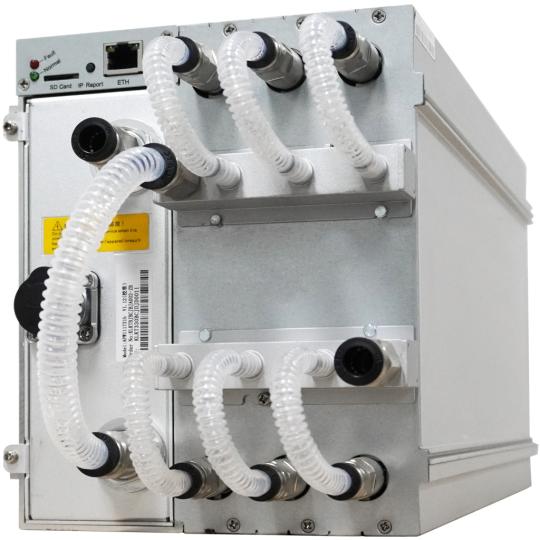
Cooling requirements present similar challenges. Mining hardware generates significant heat that must be dissipated continuously. Air cooling suffices for smaller deployments but becomes impractical at scale. Advanced equipment like the bitmain antminer s21 hyd 335th uses liquid cooling for maximum efficiency but requires appropriate infrastructure support.
Financial Modelling Requirements
Rigorous financial modelling is essential before committing capital to mining operations. The analysis should encompass multiple scenarios reflecting cryptocurrency price volatility, difficulty adjustments, and energy cost variations.
Capital expenditure includes equipment costs, infrastructure modifications, and installation expenses. Operating expenditure covers electricity, hosting or facility costs, maintenance, and administrative overhead. Revenue projections must account for declining equipment efficiency relative to network difficulty over time.
Payback period analysis under various scenarios reveals risk exposure. Conservative modelling assumes flat or declining cryptocurrency prices and rising network difficulty. Optimistic scenarios assume price appreciation and favourable difficulty adjustments. Reality will fall somewhere in between, but understanding the range informs appropriate position sizing.
Sensitivity analysis identifies which variables most impact returns. For most operations, electricity costs and cryptocurrency prices dominatesmall changes in either dramatically affect profitability. Understanding these sensitivities enables appropriate risk management and hedging strategies.
Tax and Accounting Treatment
Mining operations create tax and accounting complexity that tech businesses must address proactively.
Mining income typically constitutes trading revenue, recognised when cryptocurrency is received at market value. This treatment differs from simply holding cryptocurrency as an investment, where gains are realised only upon sale. The distinction matters significantly for tax timing and potentially for rates applied.
Equipment depreciation follows standard capital asset treatment, typically over three to five years depending on jurisdiction and equipment type. Accelerated depreciation may be available in some circumstances, improving early-year cash flows.
Cryptocurrency treasury management introduces additional complexity. Coins held after mining create ongoing valuation requirements and potential capital gains when eventually sold or exchanged. Treasury policies should address whether to immediately convert mining proceeds to fiat currency or hold cryptocurrency positions.
Transfer pricing considerations arise for businesses operating across multiple jurisdictions. Where mining operations are located relative to other business entities affects how profits are allocated and taxed.
Risk Management Framework
Prudent mining diversification requires explicit risk management beyond standard financial analysis.
Cryptocurrency price exposure represents the primary risk factor. Operations profitable at current prices may become unprofitable if prices decline significantly. Risk management options include immediate conversion of mining proceeds to fiat currency, hedging strategies using derivatives markets, or sizing positions small enough that adverse scenarios don’t threaten broader business health.
Operational risks include equipment failures, facility issues, and supply chain disruptions affecting replacement parts or new equipment. Mitigation strategies involve redundancy, maintenance programmes, and supplier relationship management.
Regulatory risk cannot be ignored. Cryptocurrency regulations continue evolving across jurisdictions. Operations should be structured to adapt to potential regulatory changes without existential impact.
Counterparty risk exists when using hosting providers, mining pools, or cryptocurrency exchanges. Diversifying across multiple counterparties and minimising balances held with third parties reduces exposure.
Integration vs. Separation
Tech businesses must decide how closely to integrate mining operations with existing business structures.
Full integration treats mining as another business unit within existing corporate structure. This approach maximises potential synergies but creates accounting complexity and ensures that mining results impact overall business performance reporting.
Separate subsidiary structures isolate mining operations legally and financially. This approach limits liability exposure, simplifies accounting treatment, and provides optionality for future sale or spin-off. However, it reduces integration benefits and may increase administrative overhead.
The appropriate structure depends on scale, strategic intent, and risk tolerance. Smaller, experimental deployments often fit within existing structures. Larger commitments with uncertain futures may benefit from structural separation.
Getting Started
Tech businesses interested in mining diversification should begin with measured steps rather than major commitments.
Pilot deployments allow learning without excessive capital at risk. Starting with a small number of machinesperhaps utilising existing facility capacityprovides operational experience and real-world financial data before scaling.
Partnership arrangements can reduce initial complexity. Hosting providers, mining pool operators, and equipment suppliers offer various arrangements that allow participation without building complete operational capability immediately.
Advisory relationships with experienced operators accelerate learning curves. The mining industry has developed sufficient maturity that consultants and advisors can help avoid common mistakes that consume time and capital.
Diversification into mining operations offers tech businesses genuine portfolio benefits when approached thoughtfully. The alignment between tech capabilities and mining requirements creates natural advantages. But success requires the same rigorous analysis, careful planning, and disciplined execution that characterises successful tech business management generally.